baby squirrel care guide
Navigating baby squirrel care requires dedication‚ understanding their needs‚ and potentially‚ professional guidance; information evolves‚ so staying updated is crucial for successful rehabilitation.
Finding a Baby Squirrel: Is Intervention Necessary?
Discovering a baby squirrel evokes concern‚ but immediate intervention isn’t always the best course of action. Often‚ seemingly abandoned youngsters are actually being monitored by their mother‚ who may be foraging for food. Observe from a distance – at least six feet – for several hours to confirm true abandonment.
A truly orphaned squirrel will be visibly injured‚ cold to the touch‚ covered in flies or ants‚ or crying incessantly without any maternal response. Remember‚ mothers have excellent senses of smell and may avoid returning if humans are too close. Prioritize observation before assuming the squirrel needs rescue; incorrect intervention can do more harm than good.
Assessing the Situation: Orphaned vs. Abandoned
Distinguishing between an orphaned and abandoned baby squirrel is critical for appropriate care. Abandonment implies the mother is unwilling or unable to return‚ while orphaned signifies she is deceased or incapable of providing care. Look for signs of injury – broken limbs‚ bleeding – indicating a reason for maternal absence.
A healthy-appearing squirrel‚ simply alone‚ is more likely awaiting the mother’s return. Consider environmental factors; recent storms or disturbances might temporarily separate mother and baby. Patience is key; prolonged observation‚ maintaining distance‚ will reveal the true situation before initiating rescue efforts.
Age Determination: Identifying a Baby Squirrel’s Developmental Stage
Accurate age determination is fundamental to providing appropriate care. Baby squirrels progress through distinct stages: pinkies (newborns‚ eyes closed‚ no fur)‚ furred babies (eyes open‚ limited mobility‚ developing fur)‚ and juveniles (fully furred‚ increasingly independent). Pinkies require constant warmth and frequent‚ specialized formula feedings.
Furred babies begin exploring‚ needing a larger enclosure and introduction to solid foods. Juveniles demonstrate climbing skills and increased self-sufficiency‚ preparing for eventual release. Observing physical characteristics – fur development‚ eye opening‚ teeth eruption – alongside behavioral milestones‚ helps pinpoint the squirrel’s developmental stage.
Pinkies (Newborns ― Eyes Closed)
Pinkies‚ the most vulnerable stage‚ require intensive care. These newborns are hairless‚ eyes are sealed‚ and they are entirely dependent on warmth and nutrition. Maintaining a stable body temperature is paramount; utilize a heating pad set on low‚ ensuring the squirrel cannot directly contact it.
Feeding must occur every 2-3 hours‚ even overnight‚ using a specialized formula like Esbilac puppy milk replacer delivered via syringe. Stimulation is vital – gently rub their genital area with a warm‚ damp cloth after each feeding to encourage elimination‚ mimicking the mother’s care.
Furry Babies (Eyes Open ― Limited Mobility)
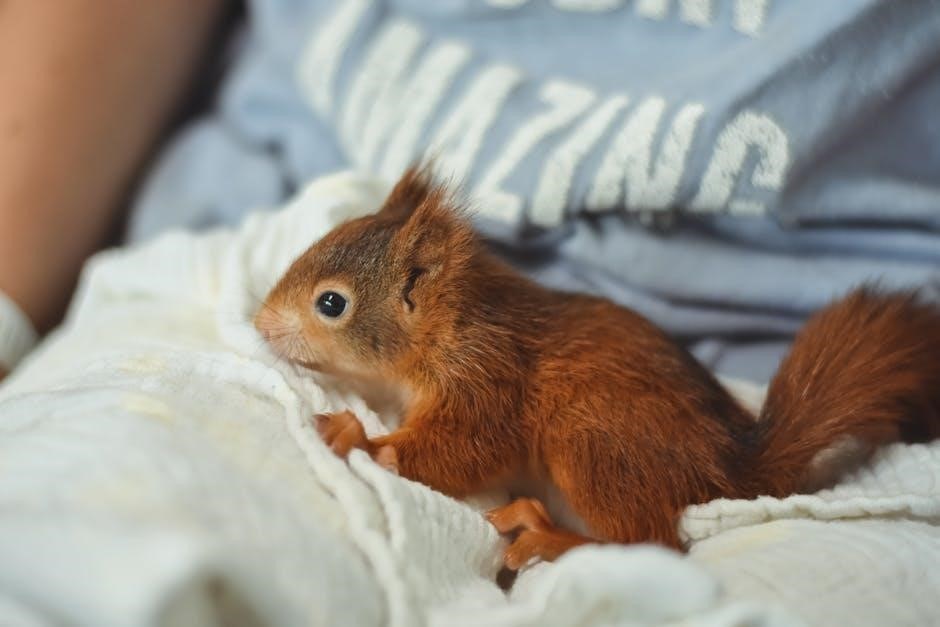
As fur develops and eyes open (around 5-6 weeks)‚ these squirrels gain some mobility but remain largely dependent. Continue providing warmth‚ though the intensity can be slightly reduced; Feeding frequency decreases to every 4-6 hours‚ still utilizing Esbilac‚ but observe for signs of readiness to transition towards solid foods.
Introduce a shallow dish of water. Encourage exploration within their enclosure‚ providing soft bedding and small branches for climbing. Continue stimulation post-feeding‚ though the need lessens as they develop. Monitor for any signs of illness or distress‚ seeking veterinary advice promptly.
Juveniles (Fully Furred ー Developing Independence)

Fully furred juveniles (8-10 weeks) exhibit increasing independence‚ actively exploring and developing climbing skills. Reduce formula feedings to 2-3 times daily‚ heavily supplementing with solid foods like nuts‚ seeds‚ and small pieces of vegetables. Ensure a constant supply of fresh water is available in a shallow dish.
Enrich their environment with branches‚ ropes‚ and nesting materials to encourage natural behaviors. Observe their eating habits and weight gain to confirm adequate nutrition. This stage focuses on preparing them for eventual release‚ fostering self-sufficiency and minimizing human habituation.
Immediate First Aid: Stabilizing a Found Squirrel
Upon finding a baby squirrel‚ prioritize warmth; hypothermia is a significant threat. Gently wrap the squirrel in a soft cloth and place it in a secure‚ ventilated container lined with fleece. Avoid direct heat sources like heating pads‚ opting for a warm water bottle wrapped in a towel.
Check for obvious injuries – broken limbs‚ bleeding – but avoid extensive handling. Offer a small amount of unflavored Pedialyte via syringe for hydration‚ but do not attempt to force-feed. Immediate veterinary assessment is crucial‚ even if the squirrel appears stable‚ to rule out internal injuries or dehydration.
Housing: Creating a Safe and Warm Environment
A secure cage is paramount; a wire cage with solid bottom‚ approximately 2ft x 2ft x 2ft‚ works well. Avoid wire mesh floors‚ as these can injure delicate feet. Line the cage with soft fleece or old t-shirts – avoid towels with loops that can snag claws. Provide branches for climbing‚ but ensure they are securely fastened.
Maintaining appropriate temperature is vital‚ especially for young squirrels. A supplemental heat source‚ like a ceramic heat emitter‚ is often necessary‚ carefully monitored to prevent overheating. The cage should be in a quiet‚ draft-free location‚ away from pets and excessive noise.
Cage Selection and Setup
Choosing the right cage is the first step. A wire cage‚ roughly 2ft x 2ft x 2ft‚ provides ample space for movement as they grow. Solid flooring is essential to prevent foot injuries; avoid wire mesh. Securely attach branches for climbing and enrichment‚ ensuring they’re stable and won’t fall.
Line the cage with soft‚ washable bedding like fleece or old t-shirts. Avoid looped fabrics like towels which can catch tiny claws. Include a small‚ secure hiding box or pouch where the squirrel can retreat and feel safe. Regular cleaning is crucial to maintain hygiene and prevent illness.
Temperature Regulation: Maintaining Optimal Warmth

Baby squirrels‚ especially young ones‚ cannot regulate their own body temperature. Maintaining a consistent warmth is vital for their survival. A temperature of 90-95°F (32-35°C) is ideal for the first few weeks‚ gradually decreasing as they develop fur.
Utilize a heating pad placed under the cage bedding – never directly inside – and always cover it to prevent burns. Monitor the temperature with a thermometer. Observe the squirrel’s behavior; shivering indicates cold‚ while panting suggests overheating. Adjust heating accordingly‚ ensuring a comfortable and stable environment.
Feeding: Nutritional Needs at Different Stages
Proper nutrition is paramount for a baby squirrel’s growth and development. Dietary needs shift dramatically with age. Initially‚ they require specialized formula mimicking mother’s milk. As they mature‚ their diet expands to include solid foods.
Understanding these stages is crucial. Pinkies need frequent‚ small feedings. Furry babies can handle larger volumes and begin exploring textures. Juveniles require a balanced diet of nuts‚ seeds‚ and vegetables to support increasing independence. Careful observation and adaptation are key to successful feeding.
Formula Selection: Esbilac Puppy Milk Replacer
Esbilac puppy milk replacer is frequently recommended by wildlife rehabilitators as a suitable substitute for squirrel mother’s milk. It closely mimics the nutritional composition needed for optimal growth‚ offering a balanced blend of proteins‚ fats‚ and carbohydrates.
Avoid cow’s milk‚ as it lacks essential nutrients and can cause digestive upset. Always follow the dilution instructions carefully‚ as incorrect mixing can lead to dehydration or malnutrition. Ensure the formula is warmed to body temperature before feeding‚ mirroring the natural experience for the baby squirrel.
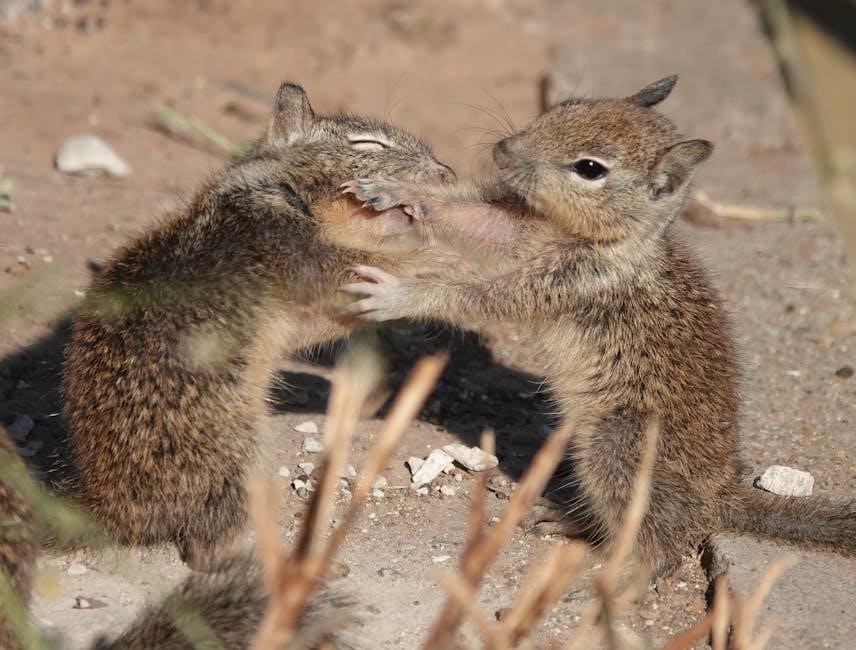
Feeding Techniques: Syringe vs. Bottle
For very young‚ pinky-stage squirrels‚ syringe feeding is generally preferred‚ allowing precise control over the amount and rate of formula delivery‚ preventing aspiration. As they develop‚ transitioning to a small animal nipple bottle can encourage a more natural suckling behavior.
Hold the squirrel in a natural feeding position – upright‚ similar to how they would nurse from their mother. Never force-feed; allow the squirrel to eat at its own pace. Clean feeding equipment thoroughly after each use to prevent bacterial growth and maintain hygiene‚ crucial for their delicate systems.
Weaning: Introducing Solid Foods (Nuts‚ Seeds‚ Vegetables)
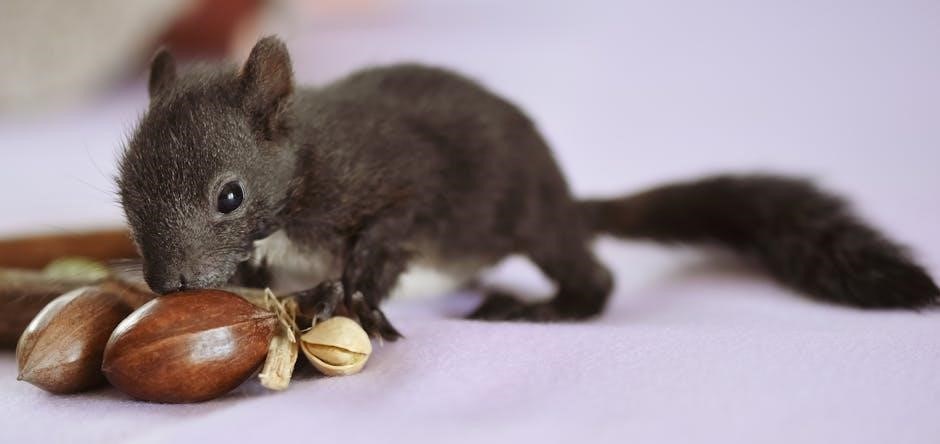
Weaning begins when the squirrel shows decreased interest in formula and starts exploring solid foods. Offer small amounts of softened‚ age-appropriate options like avocado‚ peas‚ or sweet potato alongside formula. Gradually introduce nuts (walnuts‚ pecans) and seeds (sunflower‚ pumpkin) – these should always be unsalted.
Ensure solid foods are finely chopped or mashed initially. Monitor for digestive upset; introduce new foods one at a time. Continue offering formula until the squirrel is consistently eating a variety of solids and gaining weight steadily‚ signaling a successful transition.
Hydration: Ensuring Adequate Fluid Intake
Hydration is paramount‚ especially for young squirrels. While formula provides some fluids‚ supplemental water is crucial. Offer water in a shallow dish or a sipper bottle‚ ensuring it’s always clean and accessible. Dehydration can quickly become life-threatening‚ presenting as lethargy and sunken eyes.
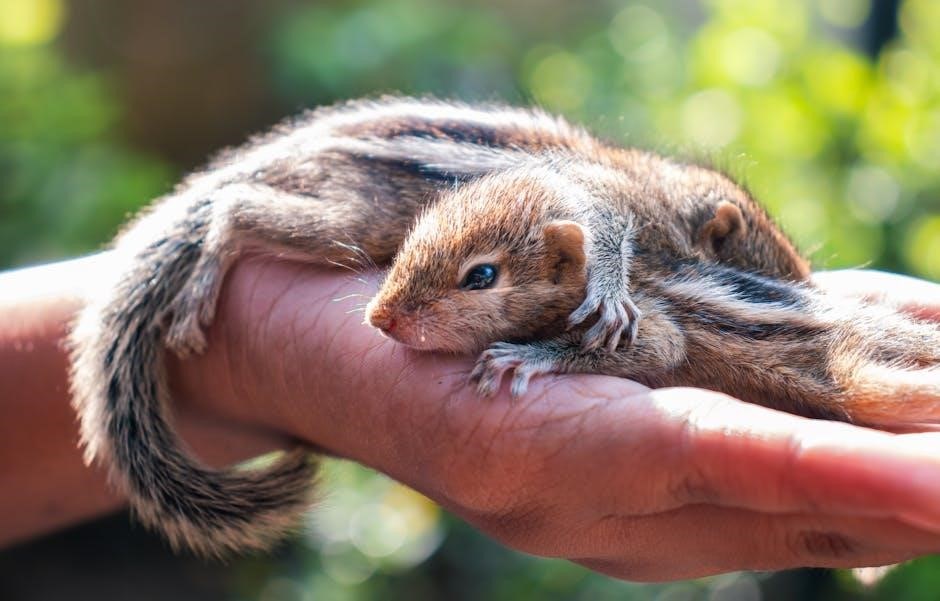
Monitor urine output – it should be pale yellow. If the squirrel isn’t drinking‚ gently offer water via syringe‚ being careful to avoid aspiration. Electrolyte solutions‚ like unflavored Pedialyte‚ can be beneficial in cases of dehydration‚ but consult a rehabilitator first.
Stimulation: Encouraging Natural Behaviors

Beyond physical needs‚ stimulating natural behaviors is vital for a squirrel’s development. Provide enrichment like branches for climbing‚ soft cloths for nesting‚ and safe chew toys. Gentle handling‚ mimicking grooming‚ encourages bonding and socialization‚ but avoid overstimulation.
Introduce foraging opportunities with hidden nuts or seeds as they grow. This encourages problem-solving skills. Observe their play; squirrels are naturally curious and active. A stimulating environment prevents boredom and promotes healthy psychological development‚ preparing them for eventual release.
Common Health Problems and Recognizing Symptoms
Baby squirrels are susceptible to various health issues. Pneumonia‚ often caused by aspiration‚ presents as labored breathing and lethargy. External parasites like fleas and mites cause itching and hair loss. Wounds‚ frequently from falls or predator attacks‚ require immediate attention and cleaning.
Dehydration is a critical concern‚ indicated by sunken eyes and skin tenting. Watch for signs of neurological issues like head tilting or seizures. Early detection is key; any unusual behavior warrants veterinary consultation. Prompt treatment significantly improves survival rates.
Preventing Self-Harm: Avoiding Common Mistakes
Baby squirrels can easily self-harm if improperly cared for. Avoid overfeeding‚ which can lead to aspiration pneumonia. Never prop the bottle‚ as this increases aspiration risk. Ensure a secure enclosure to prevent falls and injuries. Do not allow the squirrel to overheat or become chilled‚ as temperature regulation is vital.
Avoid direct human contact beyond necessary care‚ minimizing habituation. Prevent chewing on inappropriate materials by providing safe chew toys. Recognize stress signals like excessive vocalization or frantic behavior‚ adjusting care accordingly. Vigilance is crucial for a healthy outcome.
Legal Considerations: Wildlife Rehabilitation Laws

Wildlife rehabilitation is heavily regulated. Most jurisdictions require permits to possess and care for wild animals‚ including squirrels. It’s illegal to keep a wild squirrel as a pet. Laws vary significantly by state and even locality‚ so thorough research is essential before intervening.
Contacting your state’s wildlife agency is the first step. Unauthorized possession can result in fines or other penalties. Supporting licensed rehabilitators ensures legal and ethical care. Understanding these regulations protects both the squirrel and yourself‚ promoting responsible wildlife conservation efforts.
Release Preparation: Soft Release Techniques
A “soft release” gradually acclimates the squirrel to its new environment. Begin by providing a secure outdoor enclosure‚ like a large cage‚ attached to a tree. This allows the squirrel to adjust to sights‚ sounds‚ and smells while remaining safe.
Offer food and water inside the enclosure initially‚ then gradually move it closer to the opening. Eventually‚ food is placed just outside‚ encouraging exploration; Monitor the squirrel’s confidence and foraging skills. Removing the enclosure signals full release‚ but continued observation is vital to ensure successful adaptation.
Finding a Licensed Wildlife Rehabilitator
If you’re unable to provide adequate care‚ locating a licensed wildlife rehabilitator is crucial. These professionals possess the expertise‚ facilities‚ and permits necessary for successful squirrel rehabilitation. Search online directories like the National Wildlife Rehabilitators Association (NWRA) website to find rehabilitators in your area.
Verify their licensing with your state’s wildlife agency. A reputable rehabilitator will offer guidance‚ accept the squirrel‚ and ensure it receives appropriate medical attention and care before release. Remember‚ attempting rehabilitation without proper training can be detrimental to the animal’s well-being;
Long-Term Considerations: Squirrel Behavior and Habituation
Successfully releasing a squirrel doesn’t guarantee a seamless transition to the wild. Habituation – losing fear of humans – is a significant concern. Avoid excessive handling during rehabilitation to minimize this risk. Released squirrels may initially exhibit boldness‚ but ideally‚ they’ll regain natural foraging and avoidance behaviors.
Observe the released squirrel from a distance. Continued dependence on humans for food hinders their ability to thrive independently. A truly rehabilitated squirrel will integrate into the wild population‚ exhibiting typical squirrel behaviors and avoiding close contact with people.
Resources: Useful Websites and Organizations
For comprehensive guidance on squirrel rehabilitation‚ the National Wildlife Rehabilitators Association (NWRA) offers valuable resources and certification programs: https://www.nwrawildlife.org/. The Wildlife Rehabilitation Information Directory (https://wildliferehabinfo.org/) provides a directory of licensed rehabilitators by location.
Additionally‚ state-specific wildlife agencies often have information regarding local regulations and permitted rehabilitators. Online forums and communities dedicated to wildlife care can offer peer support and practical advice‚ but always verify information with qualified professionals. Remember‚ accurate and reliable information is key to successful squirrel rehabilitation.